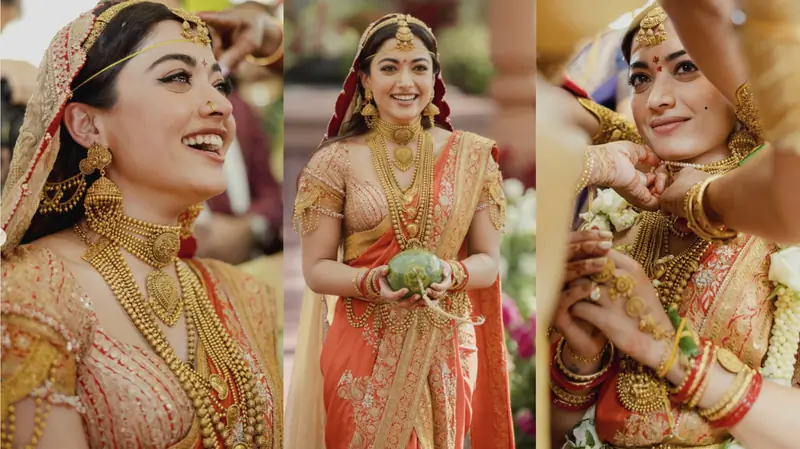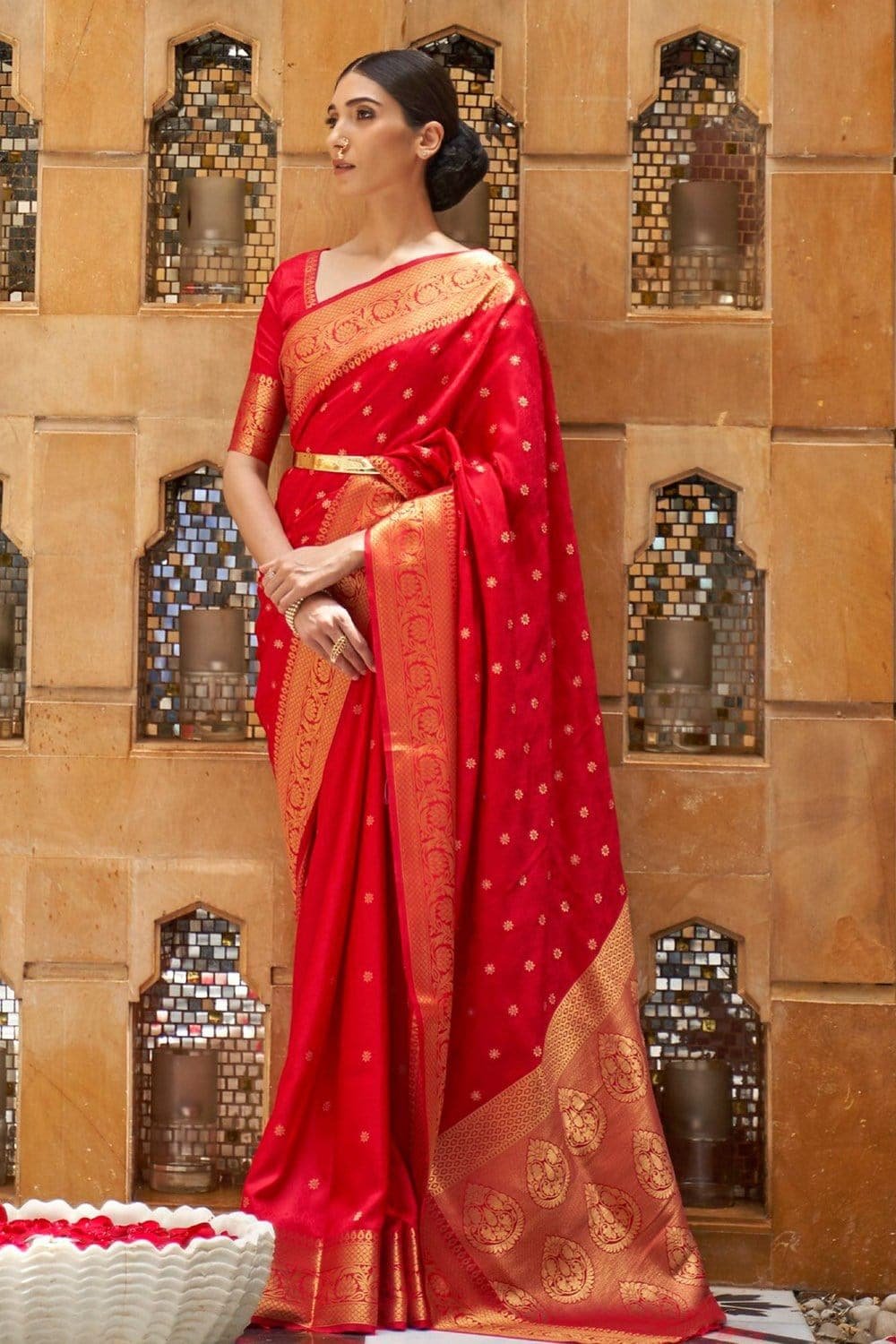
Choosing between Banarasi and Kanjivaram sarees for your wedding? Explore differences, pros, cons, images, and expert styling tips to pick the perfect bridal saree.
When it comes to choosing the perfect wedding saree, two iconic Indian weaves always stand out — Banarasi and Kanjivaram. Rich, royal, and timeless, both sarees have a special place in bridal fashion. But with so many brides trying to pick the one for their big day, the natural question is:
Banarasi vs Kanjivaram Saree — which is best?
The truth is:
Both sarees are masterpieces, but each shines in its own way depending on the bride’s style, personality, and ceremony type. This guide will help you understand the differences, compare them, and pick the right one for your wedding look.
What Makes Banarasi & Kanjivaram Sarees So Special?
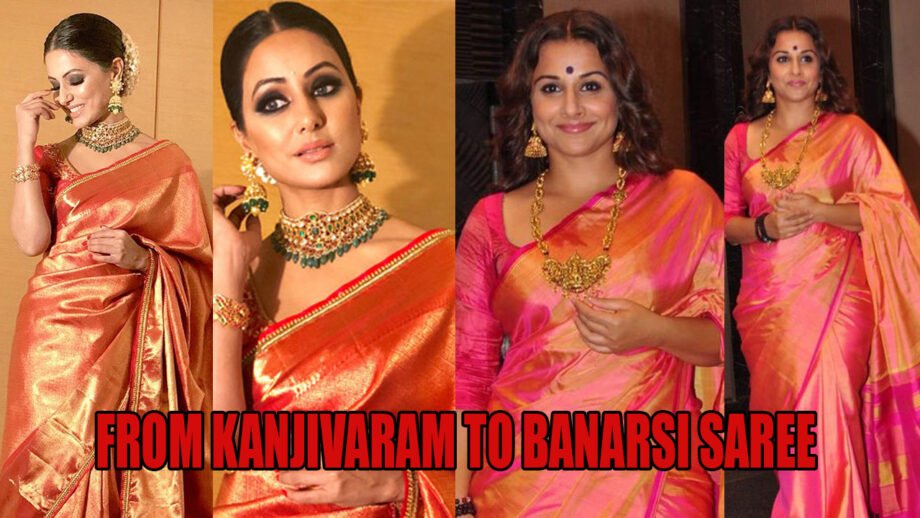
Both sarees are treasured across India for their craftsmanship, heritage value, and exceptional beauty. They are often passed down as heirlooms, holding emotional and cultural significance for many families.
Understanding the Banarasi Saree
What Is a Banarasi Saree?
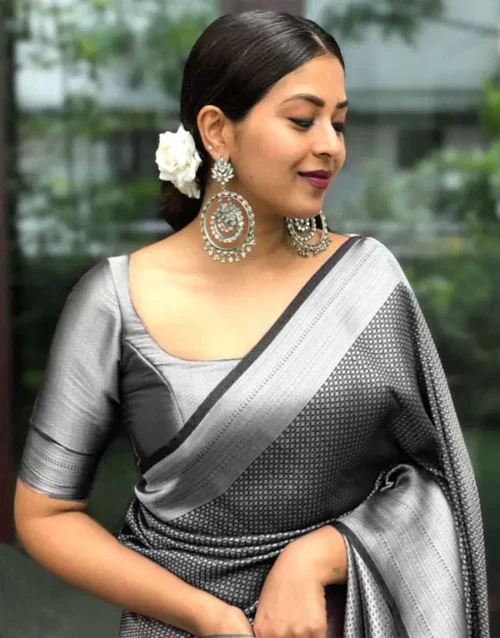
The Banarasi saree originates from Varanasi (Banaras) and is celebrated for:
- Fine silk texture
- Intricate brocade or zari work
- Mughal-inspired motifs like buti, jangla, and florals
- Lightweight fall yet royal shine
Banarasi sarees are elegant, sophisticated, and perfect for brides who want rich detailing without too much weight.
Types of Banarasi Sarees Brides Love
1. Katan Silk Banarasi
Pure silk, luxurious texture, and bold zari patterns.
2. Organza Banarasi
Lightweight, sheer, and perfect for pre-wedding events.
3. Shattir Banarasi
Modern designs for brides who like contemporary twists.
4. Georgette Banarasi
Comfortable for dancing and movement.
Why Brides Choose Banarasi Sarees
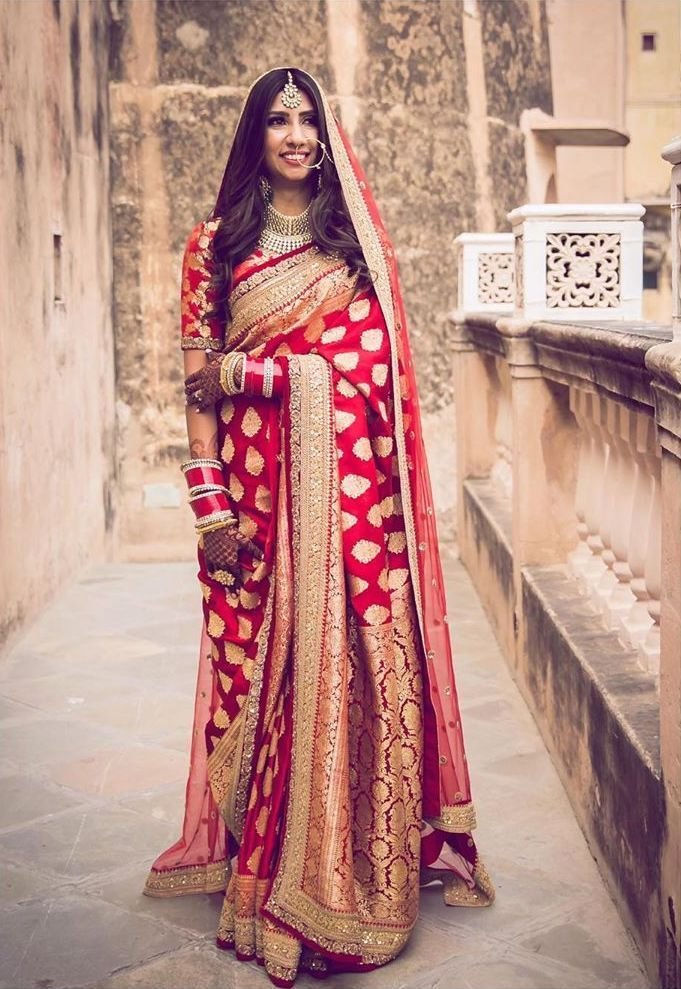
Pros of Banarasi Sarees
- Lightweight compared to Kanjivaram
- Works beautifully in warm weather
- Detailed and visually rich
- Budget-friendly options available
- Easier to drape for first-time saree wearers
Cons
- Slightly less structured
- Not as lustrous as Kanjivaram
- Requires careful storage to preserve zari shine
Understanding the Kanjivaram Saree
What Is a Kanjivaram Saree?
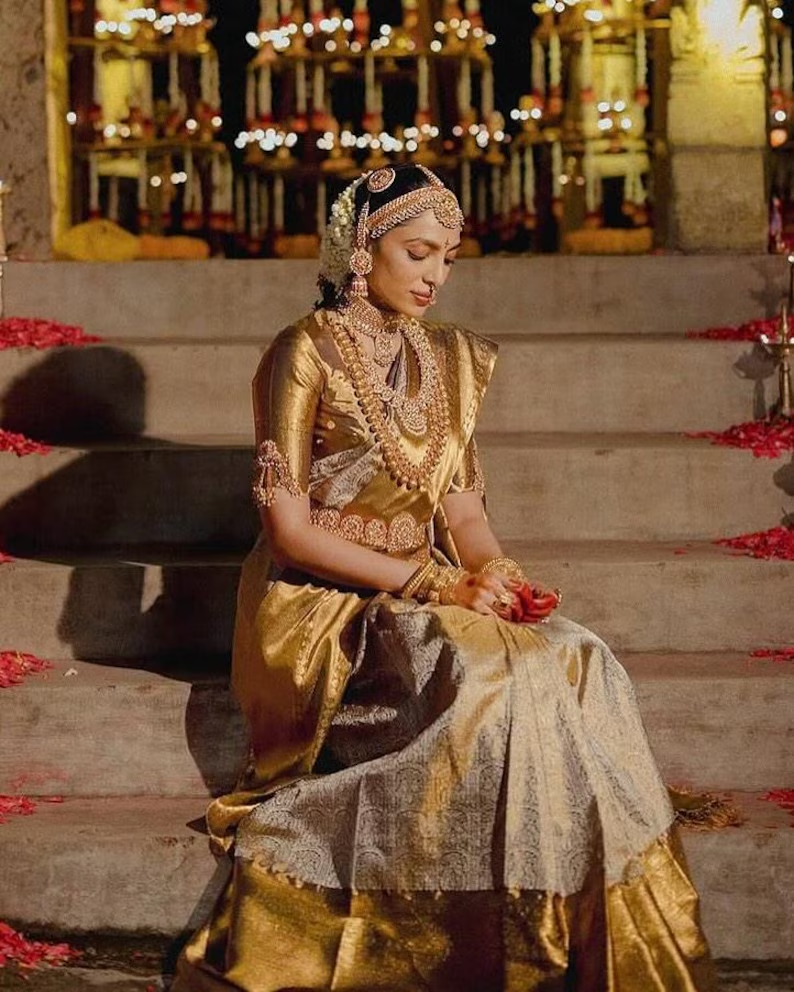
The Kanjivaram (or Kanchipuram) saree comes from Tamil Nadu and is celebrated for:
- Thick, durable, high-quality mulberry silk
- Bold and contrasting borders
- Strong drape with grand bridal presence
- Temple-inspired motifs, checks, stripes, and peacocks
Kanjivaram sarees are majestic and ideal for brides who love grand, traditional, and bold looks.
Types of Kanjivaram Sarees Brides Prefer
1. Pure Kanjivaram Silk Saree
Timeless, traditional, and perfect for ceremonies.
2. Korvai Kanjivaram
Famous contrasting borders woven separately.
3. Soft Silk Kanjivaram
Lightweight version for comfort.
4. Bridal Kanjivaram with Heavy Zari
Luxurious, rich, and ideal for wedding rituals.
Why Brides Choose Kanjivaram Sarees
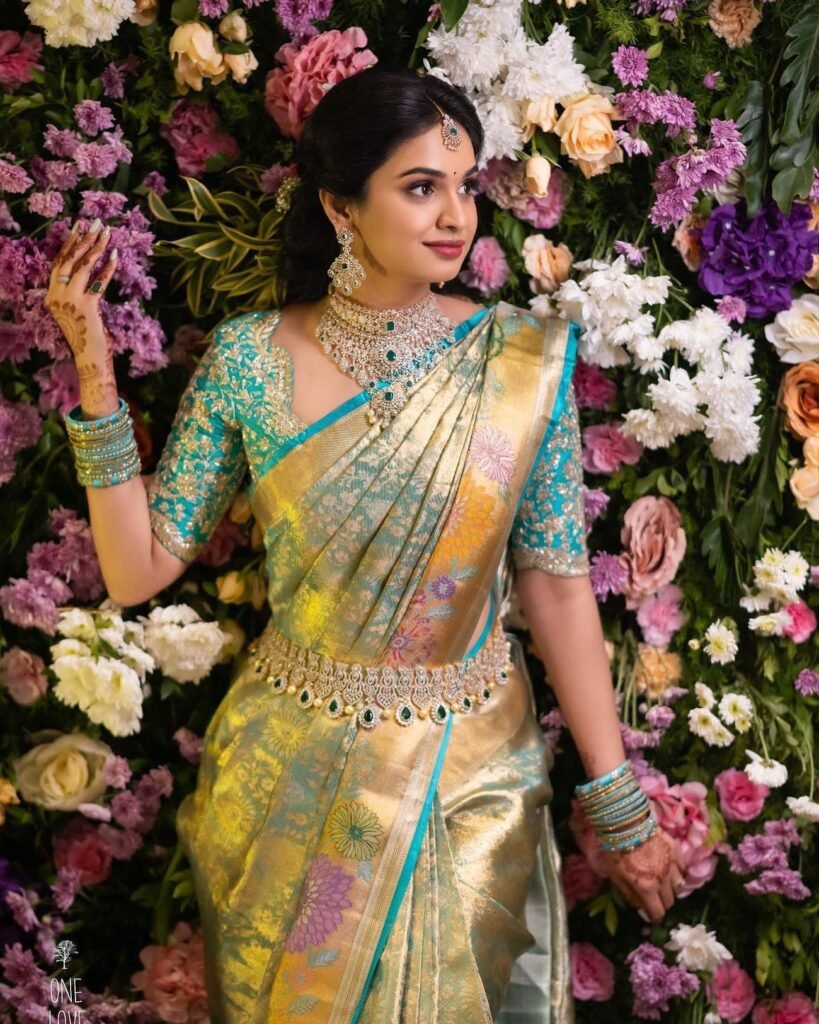
Pros of Kanjivaram Sarees
- Very durable and long-lasting
- Rich, glossy texture
- Looks stunning in photos
- Holds shape beautifully
- Ideal for formal ceremonies
Cons
- Heavier than Banarasi
- Higher cost for pure silk versions
- Can feel warm in summer weddings
Banarasi vs Kanjivaram: A Complete Comparison.
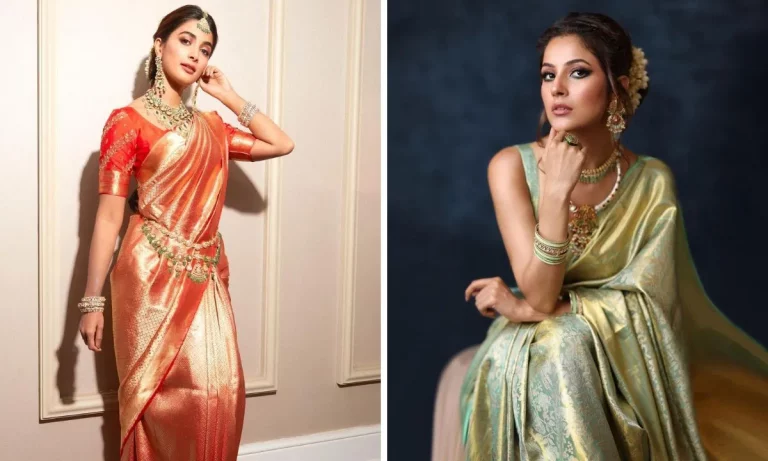
Below is a detailed comparison across key factors:
Silk Quality
- Banarasi: Fine, soft, lightweight
- Kanjivaram: Thick, rich, heavy mulberry silk
Weaving Style
- Banarasi: Brocade weaving with zari
- Kanjivaram: Interlocking weaves with contrasting borders
Weight
- Banarasi: Light to medium
- Kanjivaram: Heavy and structured
Durability
- Banarasi: Delicate
- Kanjivaram: Extremely long-lasting
Cultural Appeal
- Banarasi: North Indian bridal favorite
- Kanjivaram: South Indian ceremonial classic
Price Range
- Banarasi: Affordable to premium
- Kanjivaram: Mid-range to luxury depending on zari
Which Saree Should You Choose?
Choose Banarasi If…
- You want something lightweight
- You prefer intricate designs
- You want elegance without heaviness
- Your wedding is in a warm location
- You prefer soft drapes
Choose Kanjivaram If…
- You want a grand and regal look
- You love bold borders and strong colors
- You prefer a saree that lasts for generations
- You want stunning traditional photographs
- You don’t mind a heavier drape
Function-Wise Saree Suggestions for Brides
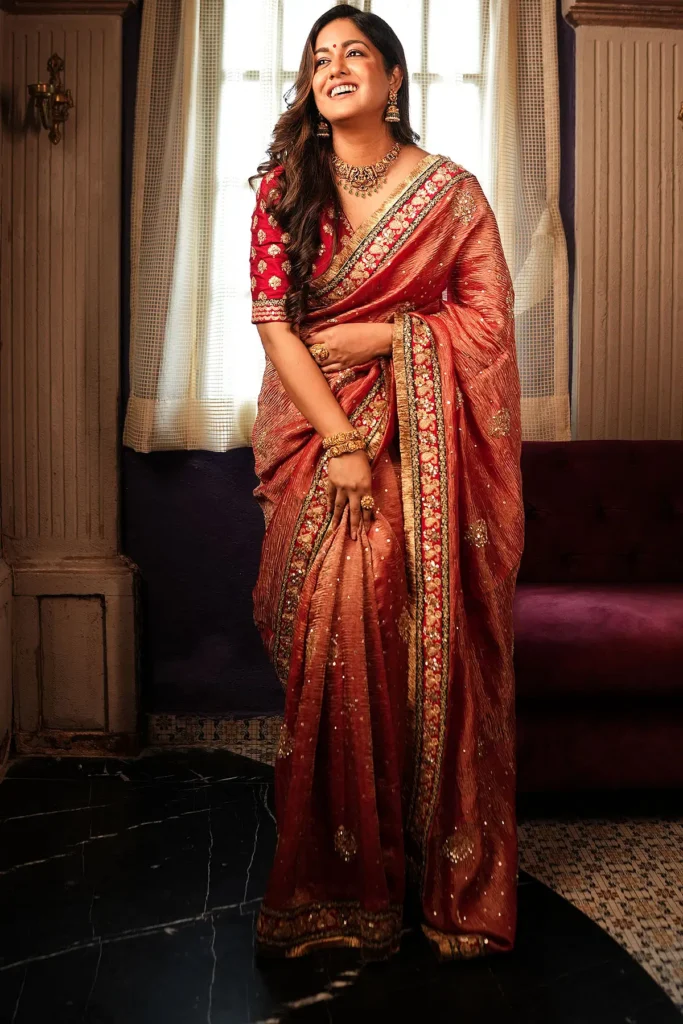
For Engagement
Banarasi or Soft Silk Kanjivaram in pastel tones
For Wedding Ceremony
Pure Kanjivaram Silk with traditional motifs
For Reception
Banarasi Katan Silk with contemporary patterns
For Temple Rituals
Korvai Kanjivaram
For Day Weddings
Light Banarasi in gold, pink, or mint
For Evening Weddings
Dark Kanjivaram like maroon, cobalt blue, or emerald
Styling Tips for Both Saree Types
For Banarasi Sarees
- Pair with kundan or jadau jewelry
- Choose sleek buns or side braids
- Opt for gold or antique finish accessories
For Kanjivaram Sarees
- Temple jewelry matches perfectly
- Traditional flowers like jasmine enhance the look
- Bold bindis and kohl complete the aesthetic
Banarasi vs Kanjivaram — Which Is Best?
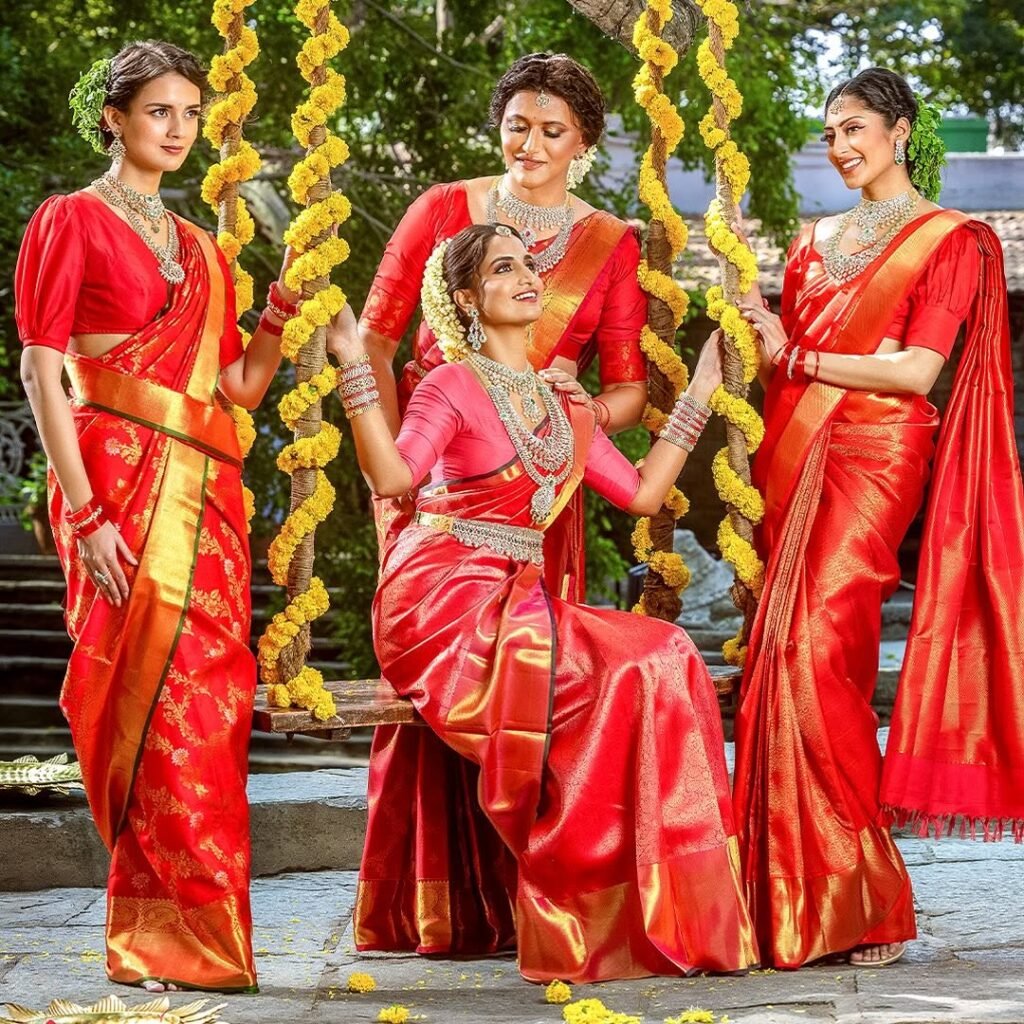
Both sarees are timeless, luxurious, and bridal favorites.
There is no “one best” — only what suits your style.
Choose Banarasi if you want:
✔ Lightweight elegance
✔ Intricate designs
✔ Subtle glamour
Choose Kanjivaram if you want:
✔ Bold, regal beauty
✔ Traditional richness
✔ Maximum bridal impact
Whichever you choose, both sarees promise an unforgettable bridal look that you’ll treasure for life.